BAMILA.S, MPT.MIAP(NEUROLOGY)
What is Plantar Fasciitis?
The plantar fascia ligament runs between the heel bone and the toes and stretches with every step. It acts like a bowstring to maintain the arch of the foot .Inflammation develops when tears occur in the tissue.
Causes
1.Those who have very flat feet or very high-arched feet are at greater risk .
2.Abnormal stretching of the plantar fascia ligament.
3.Abnormal strain on the plantar fascia by wearing non-supportive footwear on hard, flat surfaces especially for jobs that require long hours on the feet or when a person is obese.
4.Inflammation of tendons due to certain types of arthritis, especially among the elderly.
5.Diabetes is also a factor that can contribute to heel pain and damage, especially among the aged. Prolonged high levels of blood glucose may result in the stiffening of soft tissues. Small tears can occur in the foot due to stress (load bearing) .Peripheral neuropathy makes the person unable to feel any injury and it could become ulcerated and get infected.
6.Athletes who do extreme exercises are also at risk for this damage.
7.Abnormal ways of walking can adversely affect the way weight is distributed on the feet. This can put added stress on the plantar fascia.
8.Wearing shoes that are thin-soled or loose, or those that do not have good arch support or the ability to absorb shock, don't protect the feet. Regular use of high-heeled shoes can contract and shorten the Achilles tendon which is attached to the heel, causing strain on the tissue around it.
Symptoms
The symptom of plantar fasciitis is PAIN …
•- that is on the bottom of the heel
•- that is usually worse upon getting up
•- that increases over a period of months
Treating Plantar Fasciitis
Plantar Fasciitis should be treated immediately. Treatment involves correcting the underlying problems. Some of the most common treatments are:
1)Stretching the calf muscles several times a day, especially in the morning and after prolonged sitting.
2)Putting an ice pack on the heel for 20 minutes several times a day to reduce inflammation.
3)Stretching the plantar fascia in the morning.
4)Rest .
5)Losing weight.
6)Not walking barefoot. Walking without shoes causes undue strain and stress on the plantar fascia.
7)Slowing down extended physical activities to give the heel a rest.
8)Temporarily changing to moderate activities such as swimming and/or bicycling instead of sports that involve running and jumping.
9)Modifying or wearing supportive shoes that have good arch support and a slightly raised heel to reduce stress on the plantar fascia and wearing shoes with soft heels and insoles.
10)Using medication.
Despite treatment, the underlying causes that brought on this condition may remain. Therefore, you will need to continue with preventive measures. Your podiatrist may suggest treatment such as…using orthotic devices that fit into the shoe to correct the fault; using padding, strapping or night splints; or physical exercises for relief. Stretching the plantar fascia can help decrease the symptoms of plantar fasciitis.
11)Plantar Fasciitis Taping
Plantar fasciitis taping is often used to alleviate stress on the plantar fascia ligament since it limits the movement of the fascia.
Athletic tape can be applied in the morning do reduce strain throughout the day, or just before exercise to keep the fascia from moving too much during physical activity. It is recommended that the tape not be left on the foot all day as well as all night because this prevents the skin from being able to breathe.

12)NIGHT SPLINTS
Night splints are usually designed to keep a person's ankle in a neutral position overnight. Most individuals sleep with the feet plantar-flexed, a position that causes the plantar fascia to tighten. A night dorsiflexion splint allows passive stretching of the calf and the plantar fascia during sleep. Theoretically, it also allows any healing to take place while the plantar fascia is in an elongated position, thus creating less tension with the first step in the morning.
Heel pain exercises: before getting out of bed
1)Before sitting up, stretch your foot by flexing it up and down 10 times.
2)While seated, roll a rolling pin or tennis ball with the arch of your foot. If you are able to, progress to doing this exercise while you are standing up.
After these exercises, put on your shoes (with orthotics inside them) or wear supportive sandals. Do not start the day walking barefoot on hard floors or tiles, or your heel pain will return.
Heel pain relief exercises: during the day
Calf Stretch
Stand facing a wall with your hands on the wall at about eye level. Put the leg you want to stretch about a step behind your other leg. Keeping your back heel on the floor, bend your front knee until you feel a stretch in the back leg.
Hold the stretch for 15 to 20 seconds. Repeat 4 times.
Achilles Tendon Stretch
Stand on a step as shown. Slowly let your heels down over the edge of the step as you relax your calf muscles.
Hold the stretch for about 15 to 20 seconds, then tighten your calf muscle a little to bring your heel back up to the level of the step. Repeat 4 times.
Hamstring Stretch
Extend one leg in front of you with the foot flexed. Bend your other knee and lean back slightly. Your pelvis should be tilted forward. Keep your upper body upright as you hold the stretch for 10-20 seconds, then switch sides.
You should feel the stretch all the way up the calf and thigh of your extended leg.
Marble Lifts
Place marbles on the floor next to a cup, as shown. Using your toes, try to lift the marbles up from the floor and deposit them in the cup. Repeat exercise 15 times.
Towel Stretch
Grab a rolled towel at both ends, holding it under the ball of your foot. Gently pull the towel toward you while keeping your knee straight. Hold this position for 15 to 20 seconds. Repeat 4 times.
Prevention
You can take some simple steps now to prevent painful steps later.
Maintain a healthy weight. This minimizes the stress on your plantar fascia.
Choose supportive shoes. Don’t use high- heeled shoes or shoes with very low heels. Buy shoes with a low to moderate heel, good arch support and anthe ability to absorb shocks. Don't walk barefoot, especially on hard surfaces.
Don't wear worn-out sports shoes. Replace your old ones before they stop supporting and cushioning your feet. If you're a runner, buy new shoes after about 400 miles.
Warm up before starting any athletic activity or sport, and start a new exercise program slowly.
Wake up with a stretch. Before you get out of bed in the morning, stretch your calf muscles, arch and Achilles tendon by reaching for your toes and gently flexing your foot. This helps reverse the tightening of the plantar fascia that occurs overnight.
References
1. Plantar fasciitis and bone spurs. American Academy of Orthopaedic Surgeons. http://orthoinfo.aaos.org/topic.cfm?topic=A00149. Accessed Feb. 2, 2011.
2. Sheon RP, et al. Plantar fasciitis and other causes of heel and sole pain. http://www.uptodate.com/home/index.html. Accessed Jan. 27, 2011.
3. Pasquina PF, et al. Plantar fasciitis. In: Frontera WR, et al. Essentials of Physical Medicine and Rehabilitation: Musculoskeletal Disorders, Pain, and Rehabilitation. 2nd ed. Philadelphia, Pa.: Saunders Elsevier; 2008. http://www.mdconsult.com/das/book/body/208746819-6/0/1678/0.html. Accessed Feb. 2, 2011.
4. Thomas JL, et al. The diagnosis and treatment of heel pain: A clinical practice guideline — Revision 2010. The Journal of Foot & Ankle Surgery. 2010;49(suppl):S1.
5. http://www.yogaawayoflife.net/plantar_fasciitis.htm
6. http://www.footminders.com/plantar-fasciitis-exercises.html
7. http://www.sportsinjuryclinic.net/cybertherapist/front/foot/plantarfasciitis/plantartaping.php
Tuesday, October 18, 2011
Heel Pain (Plantar Fasciitis) in People with Diabetes


Monday, October 3, 2011
NUTRITION WEEK 2011
DEPARTMENT OF NUTRITION,
M.V.HOSPITAL FOR DIABETES, ROYAPURAM
Nutrition is the focal point of health and well- being and is directly related to human resource development, productivity, and ultimately, to national growth. In order to provide education and to create an awareness of the importance of nutritional food habits among individuals, September 1st – 7th is observed as National Nutritional Week in our country.
It was celebrated for the first time in 1981 to highlight the problem of malnutrition which continues unabated despite significant achievements made in agricultural production, food sufficiency and industrial growth.
Malnutrition is a complex phenomenon. It is the cause and the effect of poverty and ill - health, and follows a cyclical, inter- generational pattern. It is linked with illiteracy, (especially female illiteracy), gender discrimination against the girl child, and the lack of safe drinking water and proper sanitation. It is directly linked with poverty, lack of purchasing power, food and nutrition insecurity, ignorance, and ill- health. It creates its own cycle within the larger cycle of poverty.
High levels of malnutrition, particularly among women and children, have directly and indirectly influenced mortality rates in infants, children and women. Although the country has been able to tackle nutritional deficiency syndromes such as pellagra, beriberi, scurvy and so on, chronic energy deficiency among adults, under- nutrition among children and micro-nutrient deficiencies across all sections of the population continue to be a cause of concern.
‘On the steps of nutrition lies the emancipation of the next generation - This is our vision and conviction’...
This was the theme for 2011. It was intended to address malnutrition and to generate awareness to tackle the problem through the existing health care delivery system by formulating strategies, policies and plans of action, thereby improving the nutritional status of the community.
On 2nd Sept, 2011, Nutrition Week was inaugurated at M.V.H Royapuram by the Managing Director, Dr. Vijay Viswanathan. The message of healthy eating habits was conveyed through a variety of programmes such as cooking demonstrations, puppet shows, exhibitions and film/ slide shows.
A COOKERY COMPETITION on “HEALTHY SNACKS’’ was held on the same day for the staff at M.V.H. 

Winners of the cookery competition
LET’S ADD COLOUR TO OUR LIFE BY ADDING COLOURS IN OUR DIET...
Samples of VEGETABLE CARVING by members of the Department of Nutrition.
A QUIZ COMPETITION was organized for patients on 3rd September. The theme was “A HEALTHY DIET FOR DIABETES’’ 
The participants of the Quiz competition
Winners of the quiz competition
A PUPPET SHOW was held exclusively for patients on 5th September. The theme was “SWEET LIFE FOR DIABETIC PATIENTS ’’. 
A quiz competition was also conducted for staff members. The theme of the quiz competition was “DIET AND DIABETES”
On 6th September a food court was set up where healthy snacks were sold to patients and members of the staff.
The same evening, Dr Sheba Sangeetha Jeyaraj (M.Sc., M.Phil.,NET,Ph.D), Assistant Professor, Womens’ Christian College was invited to speak on “Nutrigenomics”.
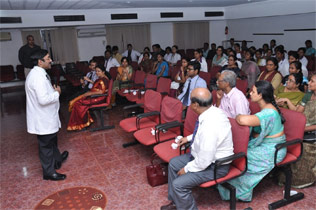
Dr. Vijay Viswanathan, Managing Director addressed the audience. This was followed by the prize distribution.
Our special thanks to the dedicated team of dietitians who organized the Nutrition Week. 
Monday, September 19, 2011
Count your vegetables intake
Mrs. Barathi, Dietitian 
"Eat your vegetables" is a favorite saying of mothers everywhere—not just parents of children with diabetes.
If you have high blood sugar then there are a number of things that you can do to maintain healthy levels. One of the best ways to do so is to make sure that you eat plenty of vegetables in your diet. Simply staying away from bad foods that contain too much sugar or foods that will spike your levels is not enough, you also need to put the right food into your system, and eating vegetables is one of the most helpful things you can do for diabetes. Consume enough vegetables, while staying within your caloric needs. Vegetables taste great and are low in calories and fat and high in vitamins, minerals, and fiber. Eating a lot of vegetables as part of a low-fat, high-fiber diet may help reduce blood pressure, manage weight, and reduce risk of heart disease, stroke, diabetes, and cancer. Dietary fiber is found in cereals, fruits and vegetables. Fiber is made up of the indigestible parts or compounds of plants, which pass relatively unchanged through our stomach and intestines. The main role of fiber is to keep the digestive system healthy. It also contributes to other processes, such as stabilising glucose and cholesterol levels. High fiber diets help to prevent diseases such as bowel cancer, diabetes and coronary heart disease.

Vegetables add bright colors, flavors and textures to your diet. They are rich in vitamins, minerals, water, dietary fiber, phytochemicals and antioxidants and contribute to a healthy diet. Vegetables are generally low in calories and carbohydrates, making them an excellent option for diabetics. Vegetables fall into two groups: starchy and non-starchy. Starchy vegetables are higher in carbohydrates and raise blood glucose levels more easily. Non-starchy vegetables are the best choice for a diabetic meal plan.
A good rule of thumb with vegetables is that healthy meals are made up of colorful foods. Bright colors in natural foods like tomatoes, carrots, beetroot, and green vegetables contain antioxidants -- food substances that help prevent disease. The deeper the color, the more nutritious is the food.
Dark Leafy Greens
Rich in calcium, vitamins A, B, C and K, magnesium, iron, protein, potassium and dietary fiber, dark leafy greens are perfect for a diabetic diet. Eating a mixed green salad before or with your meal is a good way to incorporate leafy greens into your diabetic meal plan. Eating enough vegetables each day is important to help you maintain your health. Green leafy vegetables contain a high concentration of folic acid which is good for pregnant women.
In addition to this, phytochemicals are an important component in most vegetables, which have been cited as having extreme beneficial effects on human health. While the antioxidant properties of certain phytochemicals has been scientifically proved, that some phytochemicals can act as anticarcinogenic agents. Lycopene has the greatest antioxidant properties, beta-carotene and cryptoxanthin have the next greatest activity.
Choosing Fresh Vegetables
When purchasing fresh vegetables, it is important to choose wisely. It’s best that you learn to recognize the signs that a vegetable may be overripe, rotten or otherwise damaged. Some vegetables may not display any evidence of damage on the outside, so it is essential that you only purchase your vegetables from a trusted source. Some fresh vegetables are treated with pesticides, antibacterial and antifungal chemicals in order to stay fresh longer. Some of these chemicals can be detrimental to your health, so it is best that you wash each vegetable thoroughly before preparing it for consumption. Adding vegetables to your diet is a very effective way to improve your overall health. There are many ways that you can incorporate vegetables into your meals such as salads, soups, mixed with chapatti and dosa dough, vegetable fried rice, vegetable sandwiches, vegetable noodles which children will also like to eat.
Vitamins & Minerals—SOURCES AND ITS HEALTH BENEFITS
BEST WAY TO TAKE VEGETABLES.
1. Wash the vegetables thoroughly before cooking or refrigerating.
2. Cut in to big pieces with skin.
3. Wash vegetables before cutting.
4. Cover with lid while cooking.
5. Don’t cook for more than seven to ten minutes.
6. Over cooking will lead to nutrient loss and change of colour.
7. Repeated reheating of vegetables is not advisable.
8. Vegetables should not be refrigerated for several days.
9. Always choose a variety of vegetables.
10. It is essential to purchase fresh vegetables.
11. Take at least ½ kg (5 cups) per day.
12. Avoid adding baking soda in vegetable preparation.
The next time you think you don't have the time to eat properly, remember that vegetables are among the most convenient foods around.
Wednesday, August 31, 2011
Prevention is Better than Cure
Alanraj Judewin, Jr. Counsellor,
Department of Primary Prevention
Knowing how to prevent diabetes is very important since there is, at present, no known cure for it. The best way to avoid it is by making some lifestyle changes which are quite easy to follow.
Here are some tips to prevent diabetes

1) Exercise is extremely important for preventing diabetes

Obesity is the highest risk factor for Type 2 diabetes. Every 20% increase in weight over desirable levels doubles the risk of diabetes. If you lose even 5% of extra weight, it will help you prevent diabetes. A sedentary lifestyle increases your chances of developing diabetes. You need at least ½ hour of exercise per day. Vigorous walking increases your heart rate. One hour a day is even better. Clinical trials have shown that when participants walked vigorously for 30 minutes a day, 5 days a week, they lost about 5-7% of their total body weight, and cut their risk of developing diabetes by 50%. Exercise not only helps reduces the risk of developing diabetes, but also enhances your immune system by getting your lymph system moving, it builds muscle and bones, improves heart and lung efficiency, reduces stress, burns fat, raises your metabolism and generally keeps your body young.


A Finnish study found that people who exercised for about 35 minutes a day had 80% less risk of developing diabetes when compared to those who did not. Experts believe that exercise helps increase the number of insulin receptors in cells so that they can use insulin more efficiently and help blood glucose move into them. The Nurses’ Health Study found that women who exercised more than once a week reduced the risk of becoming diabetic by 30%. Studies have revealed that exercise also lowers blood sugar and keeps it down for several hours after the exercise, and this also contributes to the prevention of diabetes.
2) Lose Weight:

Weight loss is also extremely important in preventing diabetes. About 80% of diabetics are overweight and excess weight has been shown to increase the risk of diabetes. In fact just losing weight and exercising can often completely control all symptoms of diabetes.

3) Eat healthy:


Be wary of fast foods. Most contain refined carbs, salt, sugar and trans- fats. In a study conducted in Minnesota, 3000 people of normal weight, aged between 18 and 30, were observed closely. Those who ate fast foods more than twice a week developed twice the rate of insulin resistance and gained around 4.5 kg more weight than those who ate fast food less than once a week.
Keep an emergency pack of nuts or fruits instead of picking up fast foods when you feel hungry


Choose unrefined cereals over refined ones. Avoid trans- fats (hydrogenated vegetable oils) of any kind. They have been shown to contribute to heart disease and may also contribute to Type 2 diabetes.
Processed and fried foods are particularly unhealthy and the fats and carbohydrates found in them undermine your health.
Choose foods with low glycemic index such as whole grains, oats, bran, brown rice.
Eat food with high fiber content such as raw fruits and vegetables, beans, whole grains, oatmeal, brown rice, and barley. Fiber helps to buffer high amounts of sugar or carbohydrates in your diet, keeping your blood sugar even, rather than having it fluctuate wildly.

Try to avoid red meats and processed meats. The cholesterol content can put you at risk for diabetes. A study conducted at Brigham and Women’s Hospital found that women who ate red meat daily, had a 29% higher risk of developing diabetes when compared to those who ate less than once a week. Also, eating processed foods like ham and hot dogs raised the risk by 43%.
4) Don't smoke: Smoking is not only associated with the development of diabetes but it also contributes to heart disease and causes lung cancer.

5) Don't drink alcohol: Alcoholic beverages contain quickly absorbed carbohydrates which can raise blood sugar quickly to unhealthy levels.

6) Find company: friends or relatives or a group can help support you in your effort to change over to your healthy, new lifestyle.

7) Manage stress: Stress increases blood glucose levels. Try to relax throughout the day by learning techniques of stress management and Yoga.

Thursday, August 18, 2011
Slim and Fit Programme
Diabetes
Chennai Slim and Fit Programme
By,
Mr.Manikandan BCom.,M.S.W
Project Officer
WDF/DRC
Overweight and obesity are vital links in the web of causation in most non-communicable diseases such as cardiovascular diseases, diabetes Cancer etc. Due to industrialization and urbanization there has been a considerable increase in the proportion of population which is obese. These changes have trickled down to child population too. Successive studies conducted by the M.V.Hospital for Diabetes and Diabetes Research Centre have proved that there is a growing trend in the prevalence of obesity in urban children, particularly in Chennai.
Childhood obesity is very troubling because the extra kilos lead to many health problems such as diabetes, high blood pressure, high cholesterol, respiratory problems, sleep and eating disorders. Obese children are at a much higher risk of growing into obese adults. They may experience fatigue and emotional problems such as low self esteem and lack of confidence. The important fact is that each child requires proper nutritious food and physical activity to become physically and mentally strong. It is good to involve the whole family in healthy habits. Children are good learners and they often follow what they see. Hence parents must be involved in the process of making their children healthy.
What is obesity ?
Obesity is the presence of excess fat in the body.
* Factors influencing childhood obesity

* BMI-FOR-AGE Percentile (5 – 20years)
* Less than percentile - Under weight
* 5th per to less than 85th Percentile - Healthy weight
* 85th per to less than 95th Percentile - Risk of weight
* 95th percentile or greater - Overweight
* BENEFITS OF NORMAL BMI
* Prevents diabetes.
* Prevents high blood pressure.
* Prevents heart disease.
* Prevents stroke.
* Prevents certain types of cancer.
* Prevents osteoarthritis (joint pains).
* Normalizes cholesterol levels and deranged blood fat levels (lipid profile).
* Increases life expectancy.
* Makes you look younger.
* HOW TO PREVENT OBESITY
* Exercise regularly for at least 30 minutes every day.
* Avoid high calorie fried snacks .Eat plenty of fruits instead.
* When thirsty, avoid drinking aerated bottled drinks. Drink more water.
* Play plenty of outdoor games and keep physically active.
* Reduce TV watching to a minimum. Help your parents in household work such as gardening and cleaning.
* Avoid frequent eat outs at restaurants.
* Do not skip main meals. This will help avoid unnecessary snacking.
* Keep to regular meal and sleep timings.
* Parental supervision is needed at most meal times.
* Healthy Tips
Eat Healthy
It’s important that your food choices are nutritionally adequate and low in calories.
* Include cereals, fruits and vegetables with a little fat.
* Avoid sugars, sweets, junk food and deep fried food.
* Eat smaller portions when you feel hungry.
* Drink water with your meals.
* Don’t skip meals to reduce weight.
* Make the Right Choice
* Be conscious of what you eat.
* Avoid munching while watching television or doing other activities.
* Eat slowly.
* Exercise daily and increase your physical activity.
* Check your weight once a week.

Thursday, August 4, 2011
Anemia & Diabetes
Aruna.V
Jr. Dietitian
Diet Department
What is anemia?
Anemia is a condition where the level of hemoglobin is below normal. Hemoglobin is the protein in red blood cells that carries oxygen to all parts of the body.

Anemia can be a temporary condition, a consequence of other health conditions, or it can be a chronic problem. People with mild anemia may not have any symptoms or may have only mild symptoms. People with severe anemia may have problems carrying out routine activities and feel tired or experience shortness of breath with activity.
Normal Hemoglobin value:
Male = 13-18gm%
Female = 11-16gm%
What causes anemia in people with diabetes?
Anemia is one complication of uncontrolled Type 2 diabetes, due to a condition called diabetic nephropathy. Nephropathy is a disease of the kidneys, common in diabetics. When the kidneys are healthy they produce a hormone called erythropoietin. Erythropoietin acts on the bone marrow to stimulate it to make new red blood cells and helps to stabilize red blood cells. In nephropathy, erythropoietin levels are low and so the bone marrow does not make enough red blood cells to carry the required amount of oxygen to all parts of the body. When the number of red blood cells is low or when the amount of hemoglobin is abnormally low, it results in a state of anemia.
Anemia is one complication of uncontrolled Type 2 diabetes, due to a condition called diabetic nephropathy. Nephropathy is a disease of the kidneys, common in diabetics. When the kidneys are healthy they produce a hormone called erythropoietin. Erythropoietin acts on the bone marrow to stimulate it to make new red blood cells and helps to stabilize red blood cells. In nephropathy, erythropoietin levels are low and so the bone marrow does not make enough red blood cells to carry the required amount of oxygen to all parts of the body. When the number of red blood cells is low or when the amount of hemoglobin is abnormally low, it results in a state of anemia.

Other causes are as follows:
•Deficiency of Vitamin B12: Vitamin B12 deficiency develops when you cannot absorb this vitamin from food.
•When the body destroys cells responsible for absorption of vitamin B12.( pernicious anemia occurs).
•Surgery that alters the surface area of your stomach or the last section of your intestine (ileum)
•Digestive diseases such as Celiac disease and Crohn's disease
•Diabetes drug therapy with metformin. Anemia occurs in nearly 30% of diabetes patients using metformin for at least three years.
Iron deficiency is due to a lack of dietary iron. Nearly 20% of women, 50% of pregnant women, and 3% of men are iron-deficient.
•Women are at higher risk due to menstruation, lactation, or pregnancy – conditions that increase the requirement.
•Growth spurts demand higher iron levels.
What are the symptoms of anemia in diabetes?

People with diabetes who have anemia may feel weak, become tired easily, and have problems carrying out routine activities. Since these symptoms are also symptoms of diabetes, it may be difficult to determine if the symptoms are caused by anemia or by diabetes.
What are the effects of untreated anemia in diabetes?
Studies show that having anemia along with diabetes may increase the likelihood of developing diabetic eye disease, developing heart disease or having a stroke. People who have both diabetes and anemia are more likely to die earlier than those who have diabetes but not anemia. Fortunately, anemia can be treated, and benefits such as increased energy, activity level and improved quality of life can be achieved.
How to prevent anemia
People with diabetes can take steps to decrease their risk of developing anemia.
Cut the risk of developing anemia by controlling both blood glucose and blood pressure. Studies have shown that people with very good blood glucose control and blood pressure control have a lower risk of developing kidney damage.
Cutting the risk of kidney disease cuts the risk of anemia.
What are the treatments available?
Correction of anemia not only leads to less tiredness, more energy, and an improved quality of life but also to a reduction in mortality and admission to the hospital. Studies suggest that treatment of anemia slows the development of some of the complications of diabetes including damage to the nerves, the eyes and the kidneys.
Treatment varies according to the cause of the anemia. Iron or vitamin supplements may be recommended. Anemia that is associated with kidney disease may require treatment with drugs called erythropoiesis-stimulating agents (ESAs) that stimulate red blood cell production.
Another goal is to treat the underlying condition or cause of the anemia.
Dietary Factors:
Low levels of vitamins or iron in the body can cause some types of anemia. These low levels may be due to poor diet or certain diseases or conditions.

Iron
Iron found in foods is either in the form of heme or non-heme iron:
• Heme Iron. Foods containing heme iron are the best sources for increasing or maintaining healthy iron levels. Such foods include (in decreasing order of iron-richness) clams, oysters, organ meats, beef, pork, poultry, and fish.
•Non-Heme Iron. Non-heme iron is less well-absorbed. Eggs, dairy products, and iron-containing vegetables have only the non-heme form. Such vegetable products include dried beans and peas, iron-fortified cereals, bread, and pasta products, dark green leafy vegetables dried fruits, nuts, and seeds.
Vitamin C
Vitamin C helps the body absorb iron. Good sources of vitamin C are vegetables and fruits, especially citrus fruits

Vitamin B12
Low levels of vitamin B 12 can lead to pernicious anemia. The only natural dietary sources of B12 are animal products, such as meats, dairy products, eggs, and fish.

Folic Acid
Folic acid (folate) is a form of vitamin B that's found in foods. Your body needs folic acid to make and maintain new cells. Folic acid also is very important for pregnant women. It helps them avoid anemia and promotes healthy growth of the fetus.

Steps to Help Prevent Anemia
•Control your blood glucose
•Control your blood pressure
•Eat recommended amount of iron
•Include vitamin C rich foods in your diet
•Avoid caffeine which limits iron absorption
Tip of the Week

Choose the right shoe and socks