MANJUSHA R MENON ( Dietitian )
RANJINI T C ( Dietitian )
MV Centre for Diabetes
Bengaluru
RANJINI T C ( Dietitian )
MV Centre for Diabetes
Bengaluru

Sorghum or Jowar,is cultivated widely across Maharashtra, Madhya Pradesh, Uttar Pradesh, Haryana, Andhra Pradesh, Tamil Nadu and Karnataka and in parts of Rajasthan.
Sorghum has high nutritional value. It is rich in potassium and phosphorus and also has a good amount of calcium with smaller amounts of iron,zinc and sodium. It also contains
high levels of unsaturated fats, protein, and fibre.Itcan be used as a means of reducing micronutrient malnutrition globally. Including sorghum regularly to the diet of pregnant women helps them achieve requirements for minerals and vitamins in their diet.
Sorghum is predominantly starchy and the protein content is comparable to that of wheat and maize.It has more antioxidants than blueberries and pomegranates. Sorghum helps to improve metabolism.

Bajra,
Sajje or Pearl Millet is known the world over as bird
food. In India it is usually grown in Rajasthan, Gujarat and Haryana because it
can adapt well to nutrient-poor, sandy soils in low rainfall areas.
This millet is known to possess phytochemicals
that lower cholesterol. It also contains folate, magnesium, copper, zinc, and
vitamins E and B- complex. It has a high energy content when compared to other
flours. It is also rich in calcium and unsaturated fats. Pearl millet is a
rich source of phosphorus, which plays an important part in the structure of
body cells. Consumption of pearl millet helps reduce the risk of Type 2
diabetes. Being a good source of magnesium, it acts as a co-factor in a number
of enzymatic reactions.

Varagu or Proso Millet is one of the most nutritious and delicious of millets and is also known as broom corn or common millet. Itcan be grown in many soil types and climatic conditions.The grains contain a comparatively high percentage of indigestible fibre. They contain high amounts of polyphenols, an antioxidant compound, and are low in fat. Kodo millet inhibits glycation and cross-linking of collagen and is considered good for people with diabetes.

Ragi or Finger millet is a rich source of calcium and the proteinhas a well-balanced essential amino acid composition. It also provides Vitamin A, Vitamin B,a good amount of iron and other minerals such as phosphorous. It is a popular millet especially in Southern India and has good antioxidant properties when compared to other common Indian foods. In Karnataka it is mostly prepared into ragi balls, popularly known as ragimudde, made into flatbreads, leavened dosa and unleavened rotis. Its high fibre content also checks constipation, high blood cholesterol and intestinal cancer.

Thinnai or Foxtail millet is a gluten free grain and the second most commonly grown millet. Foxtail millets are high in iron content and are totally pest-free. Theycan be used as anti pest agents when storing delicate pulses such as green gram. They also control blood sugar and cholesterol levels & increase HDL cholesterol.
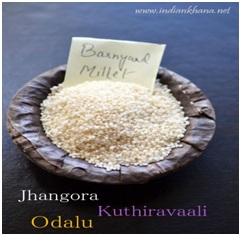
Barnyard milletis high in fibre content, phosporous and calcium and has a low glycemic index. Thus it is a must in a diet for people with diabetes. Regular intake of this millet protects against cardiovascular disease.

Saamai or
Little millet is grown throughout India and is a
traditional crop of Karnataka. It is generally consumed as rice and any recipe
that requires rice as an ingredient can be prepared using this millet. Like other millets, this is also
a rich source ofiron and fibre and has high antioxidant activity. It is good
for people with diabetes and those with diseases related to the stomach.
Millets Nutrition Facts per 100gms:
Millets Nutrition Facts per 100gms:

Source
1. ‘Millets in Your Meals’ – a NABARD publication.
2. ‘The 200 Super Foods That Will Save Your Life’ by Deborah A. Klein, M.S (registered dietitian)
Still to come … Interesting Millet Recipes
2. ‘The 200 Super Foods That Will Save Your Life’ by Deborah A. Klein, M.S (registered dietitian)
Still to come … Interesting Millet Recipes